
CSP Arrest Authority in Connecticut
CSP sits inside the Department of Emergency Services and Public Protection. Its troopers work three districts and 11 troops. Patrols cover highways and other state roads across Connecticut. "Highway patrol" is a fair label for part of the job. It is not the agency's official name, though. Notices and jurisdiction cross town lines. Yet the arrest record stays with the agency that created it.
Daily work ranges from traffic enforcement and DUI patrols to warrants, crashes, and investigations. A person arrested by CSP may be processed at a troop. Another law-enforcement facility may handle that step before arraignment. The official Connecticut State Police home page confirms the agency name. It also shows the agency's place within DESPP.
Connecticut State Police Arrest News
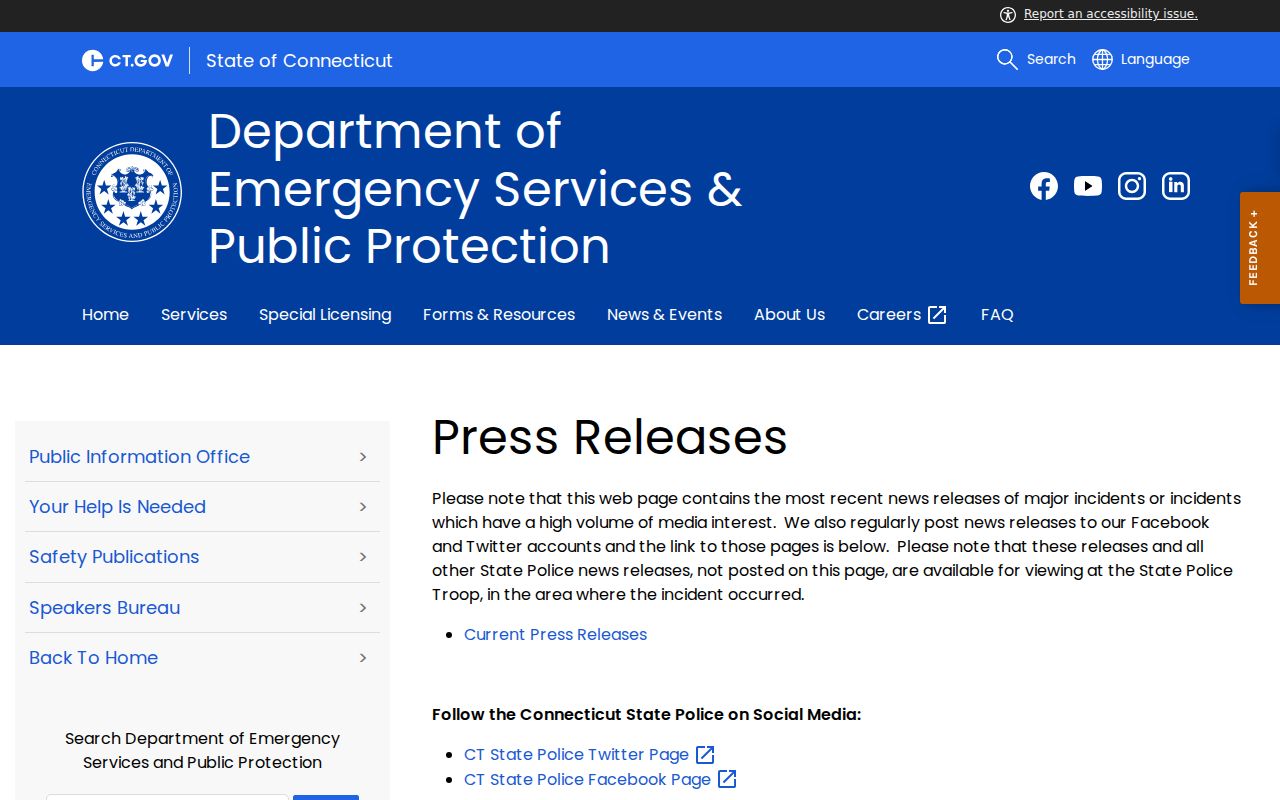
Start with the Public Information Office for CSP arrest news. That office posts selected major incidents and matters of high public interest. A troop serving an area may carry other notices. So may the agency's official social channels. None of it adds up to a daily roster. The department publishes no public dispatch log listing every CSP arrest.
| Official channel | What it can show | Coverage limit |
|---|---|---|
| CSP PIO Press Releases | Selected incidents, arrests, and enforcement announcements | Major or high-interest items, not every arrest |
| CSP News | Current PIO stories, some with images in individual releases | News stream, not a complete booking list |
| CSP Facebook and CSP on X | Timely official announcements and troop notices | Posts can be edited, removed, or hard to search later |
| Crime Data Repository | Agency-reported statistics from 2014 onward | Statistical data, not a person-by-person arrest feed |
The CSP PIO landing page explains that selected releases are the public-information route.
Check the date stamped on each release. That date can differ from the day the arrest or operation actually happened.
Find a Connecticut CSP Arrest
Search the PIO release archive first for a major incident, public alert, or enforcement operation. A blank result does not mean nobody was arrested. Some CSP arrests simply never earn a release. Find out which troop or local department handled processing, then contact that records unit. A town police log may skip a CSP event entirely. CSP runs no county rosters. For an official search path, follow these steps:
- Search CSP’s release page by incident, town, troop, or event date.
- Check CSP News and official social posts for notices that may not be in the release archive.
- Identify the agency that processed the person and request its public arrest or incident record.
- Use the Connecticut locality directory to route to the municipal source when the event was handled locally.
- Read the court docket for a disposition after a case exists; do not infer the outcome from an arrest notice.
Where the event appears depends on the case stage. The arresting agency records the arrest, the court builds a docket, and custody can shift between state systems after arraignment.
Where Connecticut CSP Arrestees Go
Connecticut has no county jail system. There is no county sheriff booking roster either. A CSP arrest may be handled at a troop or another law-enforcement facility before the person reaches court. If someone stays in state custody after arraignment, DOC takes over routing, with placement set by the court and DOC operations. The arresting agency keeps the arrest record and any booking photo. No county jail feed exists to hold them.
A person can be arrested and released without ever entering DOC custody. A DOC result shows current DOC status and does not settle a pending case.
The official Connecticut chain-of-custody report lays out the path from arrest through court to custody. For post-sentencing searches, the Connecticut DOC Inmate Information Search is one route.
Request a Connecticut CSP Arrest Report
DESPP Reports and Records handles state police report requests. The current page routes many of them through GovQA. For criminal arrest and other report categories, DPS-96-C remains the form. Section 29-10b sets a non-refundable $16 search fee even when no document turns up. Each copy adds another $16. Name the record you want. That could be an arrest report, a releasable identification photo, an incident report, or something else specific. Mailed DPS-96-C requests go to DESPP/DSP Reports and Records. The address is 1111 Country Club Road, Middletown, CT 06457. Verify the current page and form before sending payment or documents, since procedures can change.
- Open the official DESPP Reports and Records page and select the current request route.
- For a paper request, use DPS-96-C and identify the criminal arrest report category.
- Include enough detail to locate the record and pay the search or copy charge shown by the current instructions.
- Ask separately for any photo, disposition, or releasable incident material that is not part of the report.
| Request item | Published charge |
|---|---|
| Search fee under § 29-10b | $16, non-refundable even if no record is found |
| Each report copy | $16 per copy |
No guaranteed turnaround exists for arrest or investigative reports. The accident-report guidance is muddled. The current page says simple motor-vehicle accident reports may appear online within 30 business days. Older FAQ and form language cites 10 business days for mailed non-accident reports. Neither estimate applies to a criminal arrest request. Follow the current DESPP FAQ and the GovQA route instead. Requests are handled in order received. A record can still be redacted or withheld where law allows.
Note: A completed request, search result, and releasable copy are separate steps; the published fee is not a promise that a record exists.
Section 29-10b spells out the search and copy fees. Confirm current portal instructions before sending money or personal information.
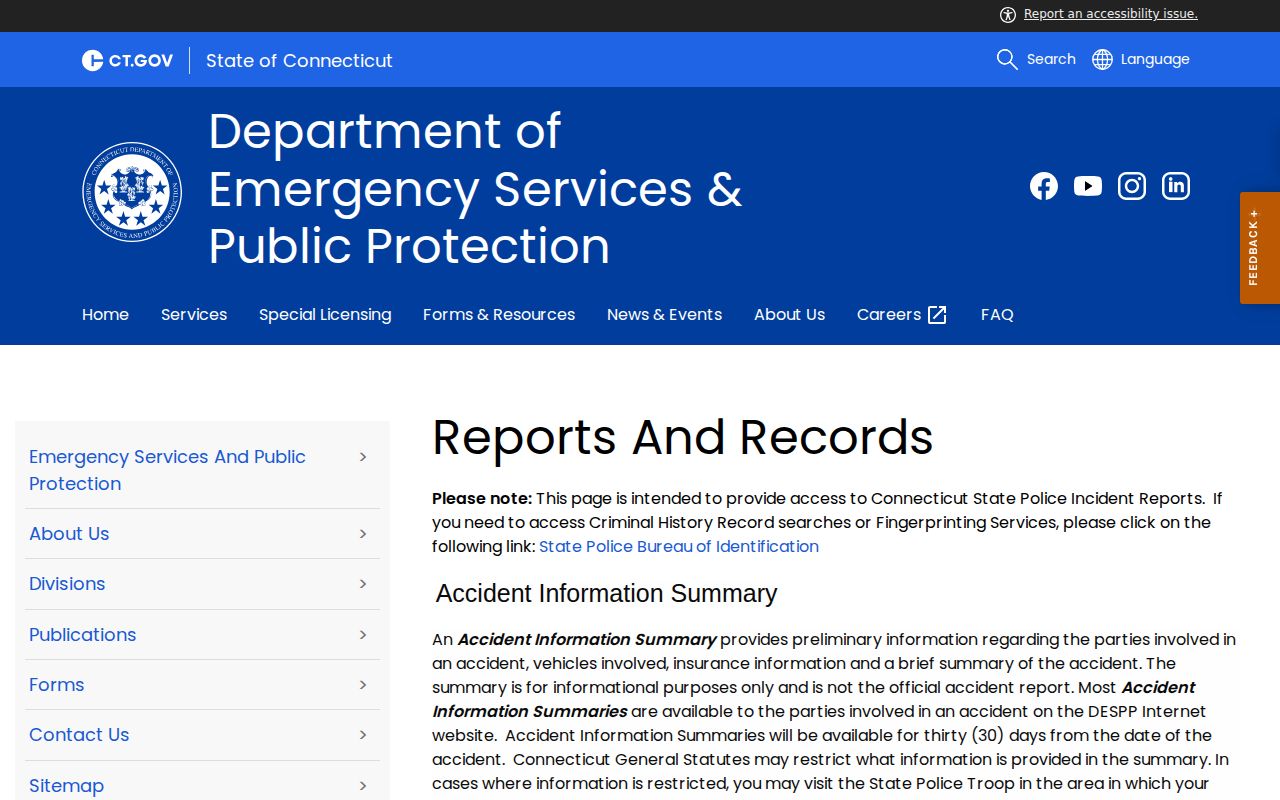
Check the live instructions before submitting, so the right form or portal is used.
DUI and Connecticut CSP Enforcement
Connecticut State Police handle much of the state's traffic and DUI work. Press releases are where that enforcement usually shows up. A February 2024 expanded traffic-enforcement release laid out a statewide operation. A separate DUI enforcement release shows the same reporting habit in action. So there is no standing checkpoint list. No feed of recent arrests flows from these notices either.
After an operation wraps, the agency may publish a roundup. It might include counts of stops, arrests, or selected charges. Read the event date and release date. Check the stated scope and any caveats too. Connecticut arrest-record rules and access limits are summarized in the statewide legal guide.
If a release names a person, the court case is where the outcome lives. Use the report-request path for the underlying arrest record.
Connecticut CSP Arrest Notice Limits
A CSP news item is selected information. It is not a photo catalog. Silence on the release page does not mean no arrest occurred, and an image in one release can be missing from another. Treat the public search accordingly.
For live custody questions, the Crimes Analysis Unit is the wrong door. Its repository holds agency-reported statistical data. Court records show the case outcome. The police records unit answers questions about an arrest report. Match the source to the question, and check the date before relying on a result. The statewide Connecticut arrest-record law guide explains the public-record boundaries and erasure distinctions.
Note: A selected news release can document a real operation without representing every arrest made during that period.