
Connecticut Police Blotter Landscape
Connecticut's multi-day arrest record lives in scattered places. Local police publications, state-police news, court information, and newspaper archives each hold a piece. A blotter may cover a set of dates and appear only after a department finishes its review. A longer window can catch a weekend entry or delayed arrest that a daily PDF misses. Still, the log stays tied to one agency. Bridgeport posts monthly adult arrest-log PDFs. Year and month links organize the archive. Danbury works in weekly or date-range PDFs. Hartford's daily batches can be read together as a longer span, while New Britain posts a weekly or periodic blotter. Windham's town-manager reports and news-flash archive sometimes carry selected police updates, and none of these are interchangeable statewide arrest feeds.
Note: A Connecticut police blotter is a publication choice by the named agency, not a guaranteed statewide record series.
The Bridgeport Police Blotter archive links date-grouped reports rather than a live roster.
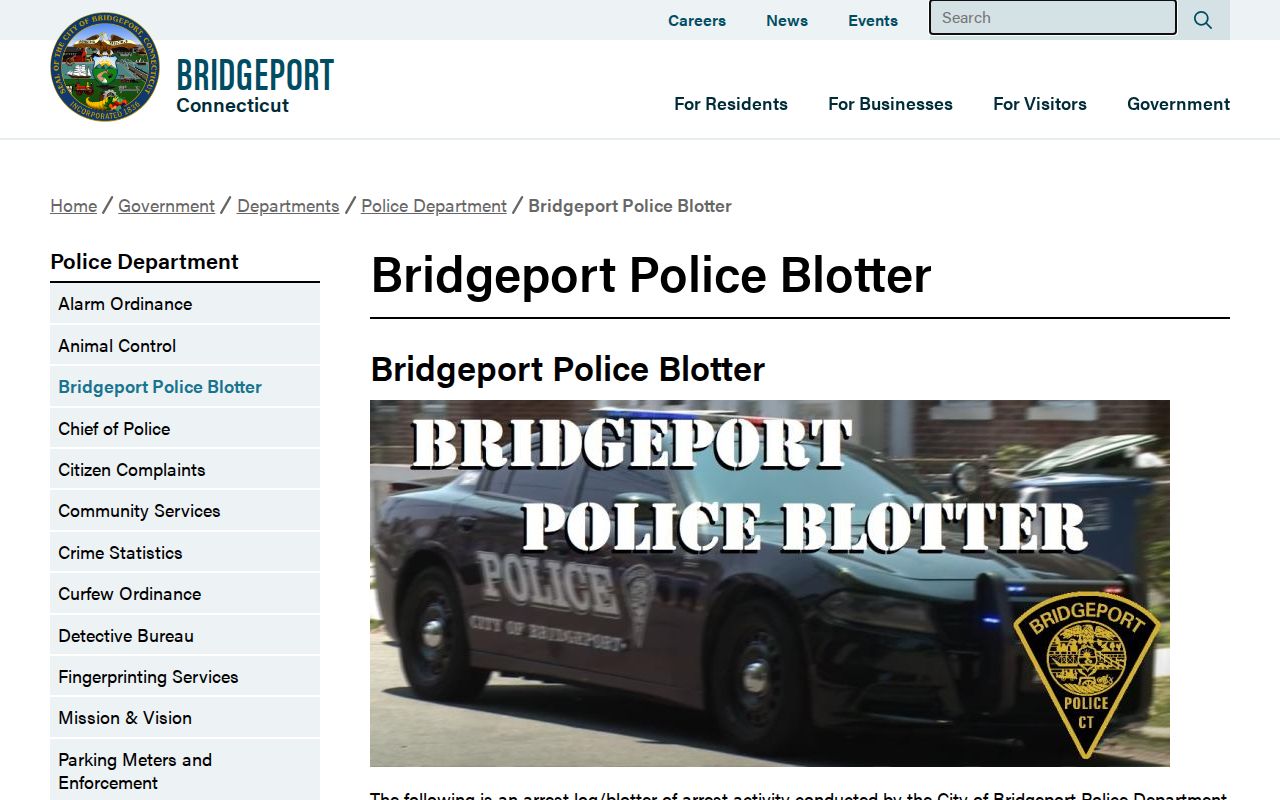
A month link can hold adult arrest and citation detail. That detail does not turn the page into a photo gallery or a full county record.
Connecticut Arrest Log Windows
Read the reporting window before the names. Some pages list arrests only. Others blend in citations, calls, or selected public-safety items, so know which type you have. A date in a PDF title can mislead. It may mark the event date or the date the report was produced, so check for a separate update note and keep the source's own label.
| Official source | Window or archive | Fields and limits |
|---|---|---|
| Bridgeport Police | Periodic monthly PDFs, grouped by year and month | Adult arrests and citations; juvenile exclusion and innocence language apply |
| Danbury Police | Weekly or date-range PDF | Name, demographic fields, incident/arrest/court dates, statute and charge |
| Hartford Police | Daily or near-daily batches, which can be assembled across dates | City-only publication with posting lag |
| New Britain Police | Weekly PDF or periodic blotter | Selected activity, not all statewide arrests |
| Windham municipal reports | Weekly or general reports and notices | May be aggregate or selected incidents rather than a named roster |
To find the right municipal source, pick the town in the Connecticut locality directory. A county label names a region. The responsible police department controls the record. To track an arrest across several days, check the police sources in this order:
- Choose the town where the arrest occurred and open that department’s official blotter or arrest-log page.
- Read the report’s date range, publication date, update note, and adult or juvenile scope before comparing entries.
- Check earlier and later issues in the same archive for a weekend or delayed entry; use the records unit if the relevant period is absent.
- Use a court docket for later case activity and DOC only for present DOC custody; neither is a replacement for the police log.
Note: A name or charge is not enough to identify a person or establish a final court result; compare dates and the official case record.
Connecticut Arrest Log Fields
Danbury's date-range logs show the fields. A name may sit beside demographic details, an incident number, arrest date, court date, cited statute, and charge. Another town may drop some of those columns. That gap means nothing was lost. Victim, witness, juvenile, sealed, and prosecution-sensitive material can also be withheld from the blotter.
| Entry field | What it tells the reader |
|---|---|
| Report date range | Which days the document covers, if stated |
| Published or updated date | When the public copy was posted or refreshed |
| Incident or arrest date | The event date recorded by the agency |
| Statute and charge | The alleged offense at arrest, not the final court result |
| Court date | A scheduled court event that may later change |
| Photo | Only present if the source displays one; most reviewed municipal PDFs did not |
Separate the publication date from the arrest date when you summarize a report. The court docket holds what comes next.
Note: A photo field missing from a blotter means the publication does not display one; it does not establish whether police took an image.
Connecticut State Police Releases
Connecticut State Police releases are event-driven. There is no complete statewide arrest blotter. The Public Information Office posts major incidents and matters of high public interest. Troops may push other material through local channels. CSP social posts carry timely notices, but they never form a searchable arrest archive. The Crimes Analysis Unit and the Connecticut Crime Data Repository hold agency-reported statistics. They do not hold person-by-person booking entries. Holiday patrol and DUI roundups often land after the activity. When the event and release dates differ, keep both. A press release may name selected arrests. An ordinary CSP arrest may never reach the public news page. The agency's full publication pattern sits in the CSP arrest reference. It is linked from the main navigation. Use a roundup for the event it describes. Never treat it as a list of everyone arrested during a shift or weekend.
Connecticut Weekend Arrest Patterns
Publication schedules lag behind police operations. That gap explains why weekend and holiday arrests get bundled into later logs. Saturday and Sunday may share one Monday or weekly document. CSP's holiday summary may follow the weekend. A Windham report may carry selected activity in a weekly municipal update. It may not carry a name-by-name arrest log. No statewide rule caps the delay.
A Monday report can cover weekend arrests. It is not a live weekend feed, so check its date range before treating the post date as the arrest date.
Start with the arresting department's page. Its records unit comes next. When one person's custody is the question, a DOC or court result may help once the record enters those systems. Neither replaces the original arresting agency. Same-day log behavior is compared separately in Arrests Last 24 Hours. That page tracks a new booking window, while this one follows multi-day PDFs, weekly reports, and archive depth.
Connecticut News Arrest Blotters
Newsrooms choose which arrests and cases to cover. Their reporting adds context. It is not a complete police log, and it may sit behind an archive service. Read official police and court sources first. Then turn to the story for its own reporting. An article may rest on an arrest release, and later case changes may never appear unless the publisher updates the piece.
| Outlet | Coverage and caveat |
|---|---|
| Hearst Connecticut titles | State and local police/court reporting; standards allow case-by-case correction or update review, not guaranteed removal |
| Hartford Courant | Statewide and metro crime reporting; use its correction route with official proof |
| WFSB | Selected arrests, warrants, and enforcement coverage |
| NBC Connecticut and News 12 Connecticut | Regional and breaking-news stories, not a roster |
| Connecticut Public | Selected accountability, court, and public-safety reporting |
| Republican-American, The Chronicle, and Norwich Bulletin | Regional stories; no universal free arrest-removal promise was found |
Spotted an error in a published arrest story? Every newsroom has a correction process, and that is the place to start. Give them the article URL. Include the official court or agency record that shows the mistake. A paper with no published removal policy may still fix a story. That holds when the story is plainly wrong.
Older Connecticut Arrest Records
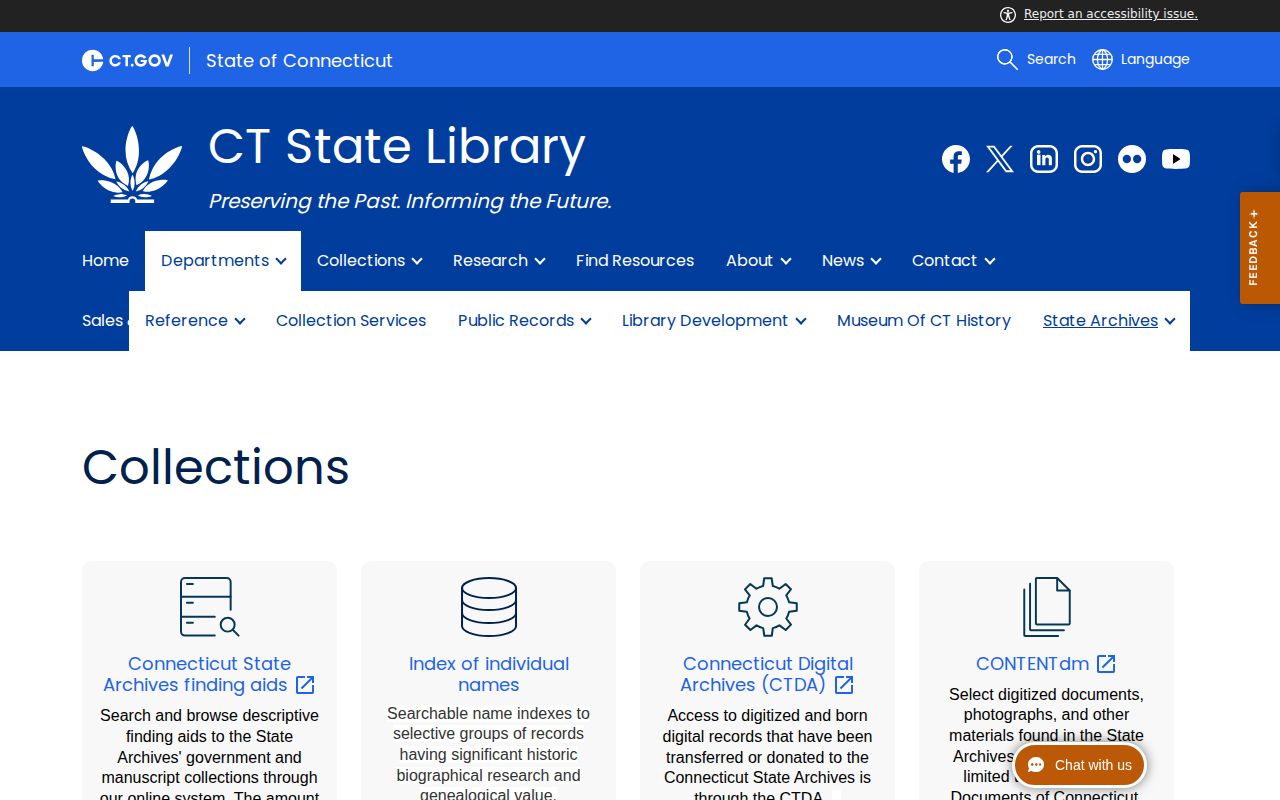
Archive depth is never uniform across Connecticut. One town keeps years of monthly PDF arrest logs. Another posts a rolling document that replaces the old one. A third links only the current week. The Connecticut State Archives preserves records of enduring value, yet it does not automatically hold every police blotter, booking image, or municipal PDF. Local municipalities often stay the custodian, even where a State Library collection adds historical context. The Archives offers finding aids for historical state records, plus a separate reproduction policy. Requests go through staff review, with privacy and copyright limits possible. Page or handling charges may apply. No single turnaround fits every request. The Connecticut State Archives collections page shows how these finding aids are organized.
Older material works differently. It is archival, not a live police log. A Connecticut booking entry has rolled off a department site. Contact that department. Ask which retention schedule and record series cover the report. The state and its towns publish general retention schedules. Treat them as a starting point. A schedule says how long the official record is kept. It does not promise a booking photo stays online that long. Caches, PDF copies, and search listings can outlive or vanish before the official record itself. Age alone tells you little about custody status. Note: A missing page is not proof of erasure.